46 Results for "

Homalomena occulta (Lour.) Schott

" in MedChemExpress (MCE) Product Catalog:
Products (46)

46 Results for "Homalomena occulta (Lour.) Schott" in MCE Product Catalog:

4
4 Cited Publications
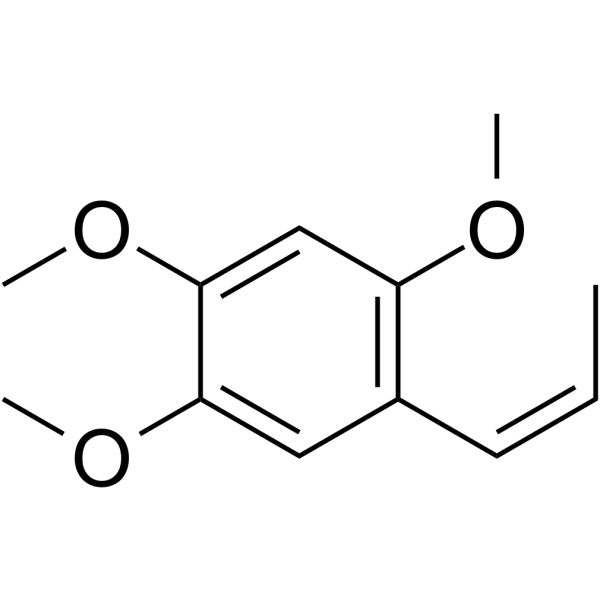
Cat. No.: HY-N1501
CAS No.: 5273-86-9
Beta-asarone is an orally active and BBB-penetrable anti-inflammatory agent and neuroprotective agent, which is the major ingredient of Acorus tatarinowii Schott. Beta-asarone can protect nerve cells from apoptosis and autophagy, inhibit expression of α-synuclein, as well as myocardial protection. Beta-asarone can be used in the study of neurological and cardiovascular diseases .
loading...
    loading...
2
2 Cited Publications
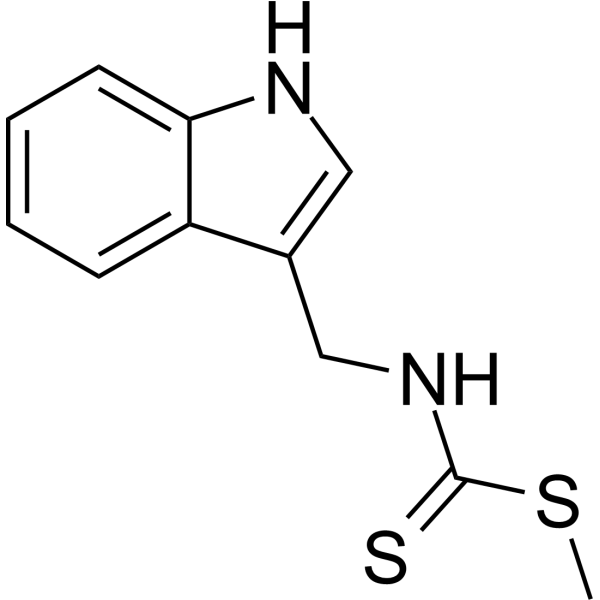
Cat. No.: HY-111334
CAS No.: 105748-59-2
Purity:  99.74%
Synonyms: Brassinine
Brassinin is the metabolism of a phytoalexin from Beassica pekinensis (Lour. ) Rupr. .
loading...
    loading...
1
1 Cited Publications
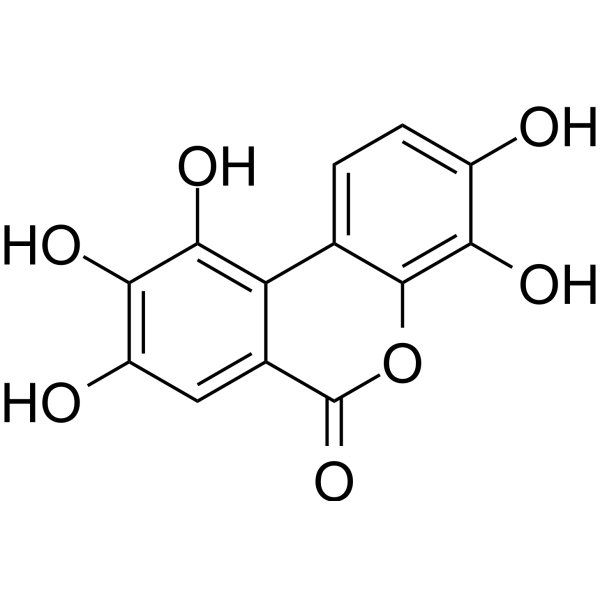
Cat. No.: HY-N7922
CAS No.: 91485-02-8
Synonyms: Decarboxyellagic acid
Urolithin M5 (Decarboxyellagic acid) is an orally active influenza virus neuraminidase inhibitor and neuroprotective agent, with IC50 values of 174.8 μM (HK68), 191.5 μM (pdm09), 243.2 μM (WSN) and 257.1 μM (PR8) against four influenza virus neuraminidases, respectively. Urolithin M5 inhibits viral neuraminidase activity, thereby blocking influenza virus replication (including oseltamivir (HY-13317)-resistant strains), protecting infected mammals from death and improving pulmonary edema. Urolithin M5 forms a hydrogen-bond stabilized complex with IGF1R, and binds to MAPK14, AKT1, NFKB1 and EGFR. Urolithin M5 reduces reactive oxygen species production, inhibits neuronal apoptosis, restores mitochondrial transmembrane potential, and promotes neurite outgrowth of damaged neuronal cells. Urolithin M5 can be used in research related to influenza virus infection and Alzheimer's disease .
loading...
    loading...
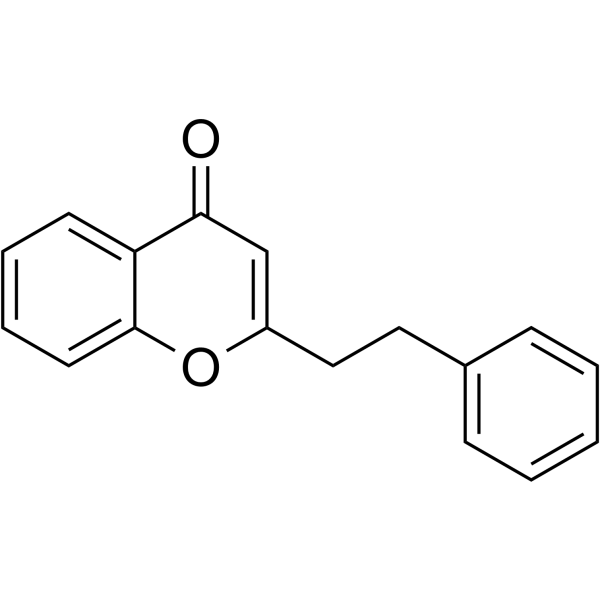
Cat. No.: HY-N8220
CAS No.: 61828-53-3
Synonyms: Flidersiachromone
2-(2-Phenylethyl) chromone (Flidersiachromone) is a chromone derivative and antioxidant. 2-(2-Phenylethyl) chromone scavenges ABTS· + free radicals, and its derivatives exhibit diverse activities including anti-inflammatory, neuroprotective, anti-tumor, and α-glucosidase inhibitory effects. 2-(2-Phenylethyl) chromone is applicable to experimental research in fields such as inflammation-related diseases, tumors, and neurodegenerative diseases .
loading...
    loading...
Cat. No.: HY-N3196
CAS No.: 143120-46-1
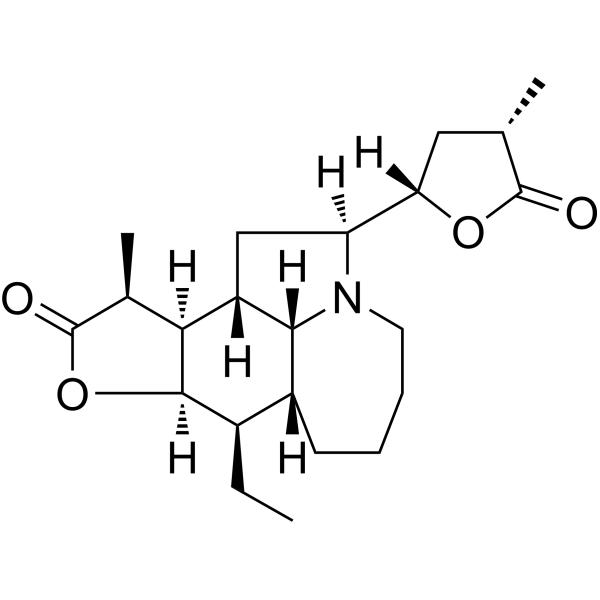
Neotuberostemonine, one of the main antitussive alkaloids in the root of Stemona tuberosa Lour, attenuates bleomycin-induced pulmonary fibrosis by suppressing the recruitment and activation of macrophages .
loading...
    loading...
Cat. No.: HY-N1474
CAS No.: 97230-47-2
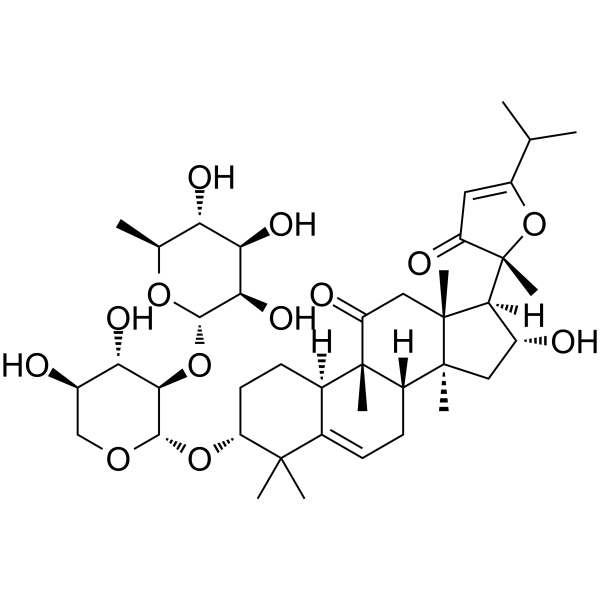
Picfeltarraenin IA, a triterpenoid obtained from Picriafel-terrae Lour (P.fel-terrae), is an acetylcholinesterase (AChE) inhibitor. Picfeltarraenin IA can be used for the treatment of herpes infections, cancer and inflammation .
loading...
    loading...
Cat. No.: HY-116753
CAS No.: 201529-58-0
Purity:  99.92%
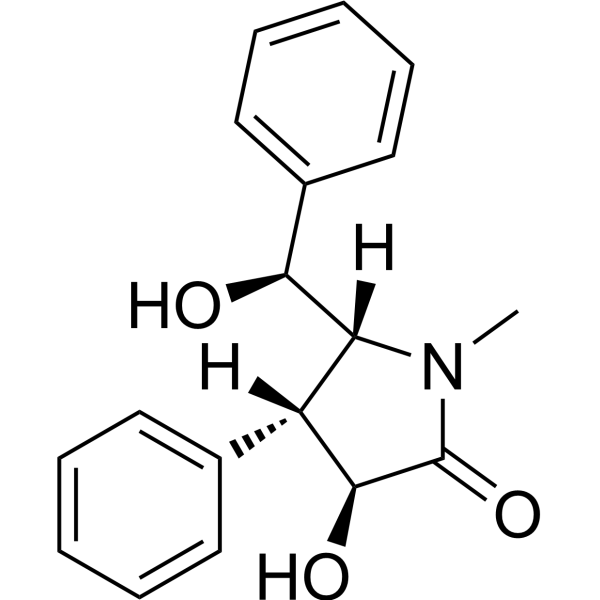
(-)Clausenamide is an active alkaloid isolated from the leaves of Clausena lansium (Lour.) Skeels, and improves cognitive function in both normal physiological and pathological conditions. (-)Clausenamide inhibits β-amyloid (Aβ) toxicity, blocking neurofibrillary tangle formation by inhibiting the phosphorylation of tau protein. (-)Clausenamide exerts a significant neuroprotective activity against Aβ25-35. (-)Clausenamide can be used for researching Alzheimer's disease (AD) .
loading...
    loading...
Cat. No.: HY-N2211
CAS No.: 97230-46-1
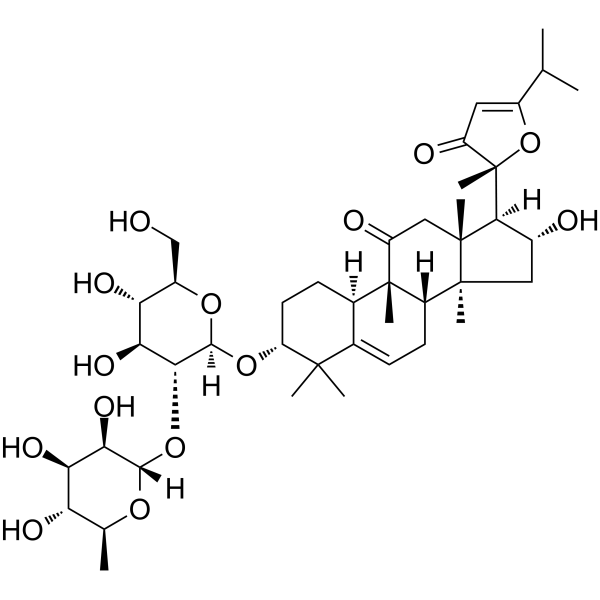
Picfeltarraenin IB, a triterpenoid obtained from Picriafel-terrae Lour (P.fel-terrae), is an acetylcholinesterase (AChE) inhibitor. Picfeltarraenin IB can be used for the treatment of herpes infections, cancer and inflammation .
loading...
    loading...
Cat. No.: HY-N1501R
CAS No.: 5273-86-9
Beta-asarone (Standard) is the analytical standard of Beta-asarone. This product is intended for research and analytical applications. Beta-asarone is an orally active and BBB-penetrable anti-inflammatory agent and neuroprotective agent, which is the major ingredient of Acorus tatarinowii Schott. Beta-asarone can protect nerve cells from apoptosis and autophagy, inhibit expression of α-synuclein, as well as myocardial protection. Beta-asarone can be used in the study of neurological and cardiovascular diseases .
loading...
    loading...
Cat. No.: HY-W1000105
CAS No.: 141-27-5
Synonyms: (E)-3,7-Dimethylocta-2,6-dienal
Geranial is an aromatic compound. It can be isolated from the fruits of Litsea cubeba Lour and the rhizomes of ginger (Zingiber officinale). Geranial inhibits LPS-induced phosphorylation of ERK1/2, JNK1/3 and IκB in macrophages. It suppresses the secretion of IL-1β, TNF-α and IL-6, as well as the expression of pro-IL-1β, iNOS and COX-2. Geranial increases ROS. It can be used in the research of inflammatory diseases .
loading...
    loading...
Cat. No.: HY-N6822
CAS No.: 31795-12-7
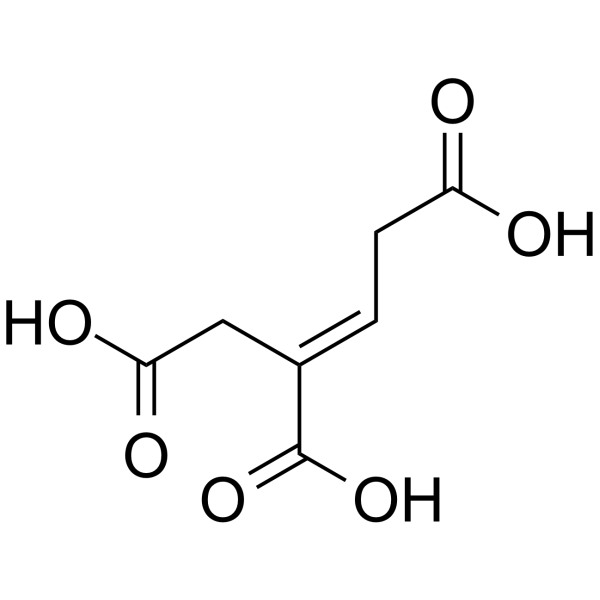
Triglochinic acid is a monomeric compound isolated from tubers of Pinellia pedatisecta Schott .
loading...
    loading...
Cat. No.: HY-W106860
CAS No.: 51761-07-0
Synonyms: 3-Formylcarbazole
9H-Carbazole-3-carbaldehyde (3-Formylcarbazole) is a carbazole compound and an anticancer agent. 9H-Carbazole-3-carbaldehyde is present in the stems of Clausena lansium (Lour.) Skeels. 9H-Carbazole-3-carbaldehyde can be used in the research of cervical cancer, leukemia, non-small cell lung cancer and liver cancer .
loading...
    loading...
Cat. No.: HY-122938
CAS No.: 185244-78-4
Synonyms: (2S,3R)-Ceplignan
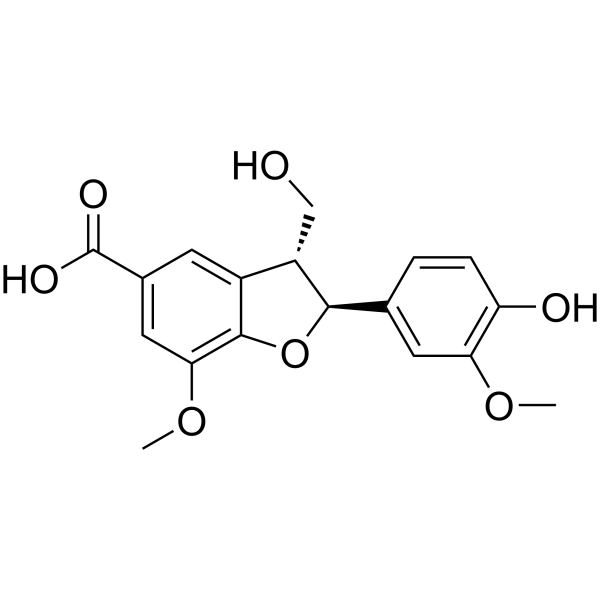
Ceplignan ((2S,3R)-Ceplignan) is a neogenic lignan, which can be isolated from the rhizomes of Acorus tatarinowii Schott. (2S,3R)-Ceplignan and (2R,3S)-ceplignan are two isomers of Ceplignan .
loading...
    loading...
Cat. No.: HY-W015850
CAS No.: 766-39-2
2,3-Dimethylmaleic anhydride is biofumigant found in Colocasia esculenta var. esculenta (L.) Schott. 2,3-Dimethylmaleic anhydride is highly toxic to insect pests for stored grains even at very low concentration, but has no adverse effect on seed germination. 2,3-Dimethylmaleic anhydride can be used as insecticide .
loading...
    loading...
Cat. No.: HY-N16537
CAS No.: 18058-98-5
2-Oxostenine (Compound 7) is a stenine-type alkaloid found in the roots of Stemona tuberosa Lour. 2-Oxostenine can weakly inhibit Lipopolysaccharide (HY-D1056)-induced NO production. 2-Oxostenine can be used for the research of inflammation .
loading...
    loading...
Cat. No.: HY-117616
CAS No.: 128-76-7
Synonyms: (+)-Laurotetanine
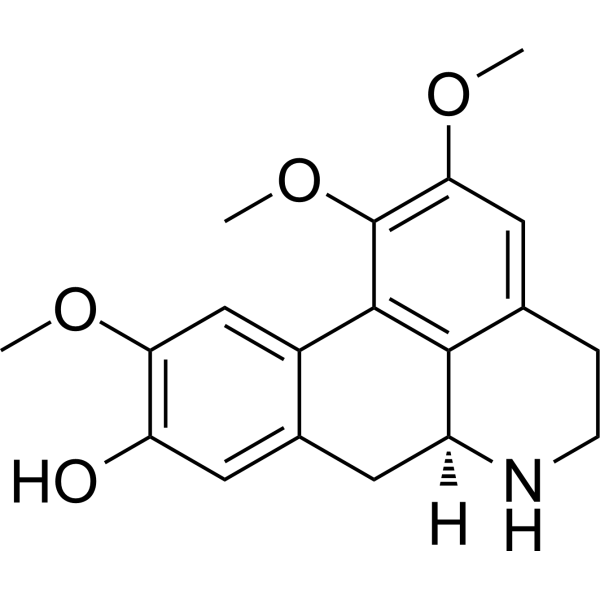
Laurotetanine ((+)-Laurotetanine) is an potent and orally active isoquinoline alkaloid and could be extracted from the roots of Litsea cubeba (Lour.) Pers. Laurotetanine exerts an anti-asthmatic effect by inhibition of IgE, histamine, and inflammatory reactions via down-regulating MUC5AC and NF-κB signaling pathways .
loading...
    loading...
Cat. No.: HY-N3241
CAS No.: 227471-20-7
Mucrolidin is an eudesmane-type sesquiterpenoid isolated from aerial parts of homalomena occulta. Mucrolidin exhibits weak antibacterial activities when it compares to Rifampicin (HY-B0272) .
loading...
    loading...
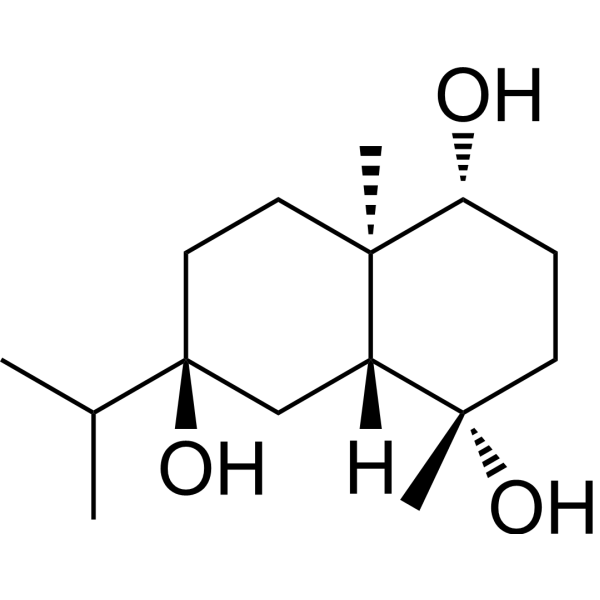
Cat. No.: HY-N0988
CAS No.: 145400-02-8
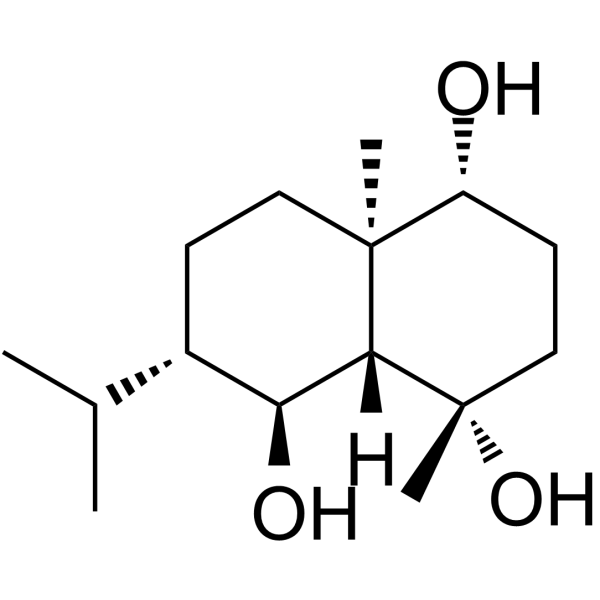
1β,4β,7α-Trihydroxyeudesmane (compound 4) is a nature product that could be isolated from the rhizomes of Homalomena occulta. 1β,4β,7α-Trihydroxyeudesmane has antiproliferative active. 1β,4β,7α-Trihydroxyeudesmane can be used in research of cancer .
loading...
    loading...
Cat. No.: HY-169354
CAS No.: 143663-00-7
Lariciresinol 4-O-β-D-glucopyranoside is a natural lignan glucoside found in the leaves and stems of Symplocos cochinchinensis (Lour.) S. Moore .
loading...
    loading...
Cat. No.: HY-N15187
CAS No.: 521-43-7
Target:  

Parasite

Acronycidine is a quinoline alkaloid with antimalarial activity and can be extracted from Acronychia baueri Schott. Acronycidine can be utilized in malari research .
loading...
    loading...

